

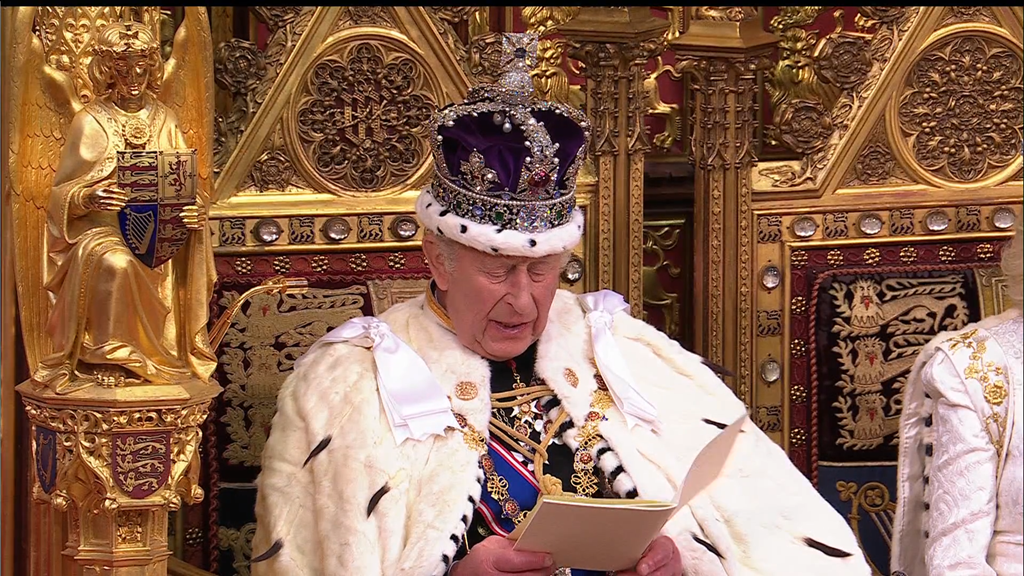
The State opening of parliament has taken place today, King Charles III delivered a speech lasting an estimate 11 minutes and 39 seconds.
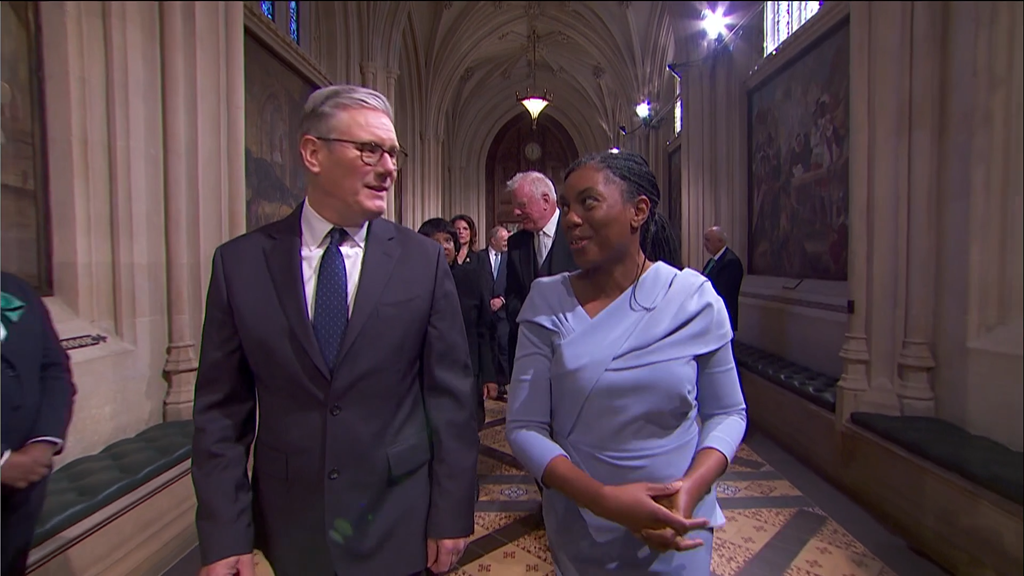
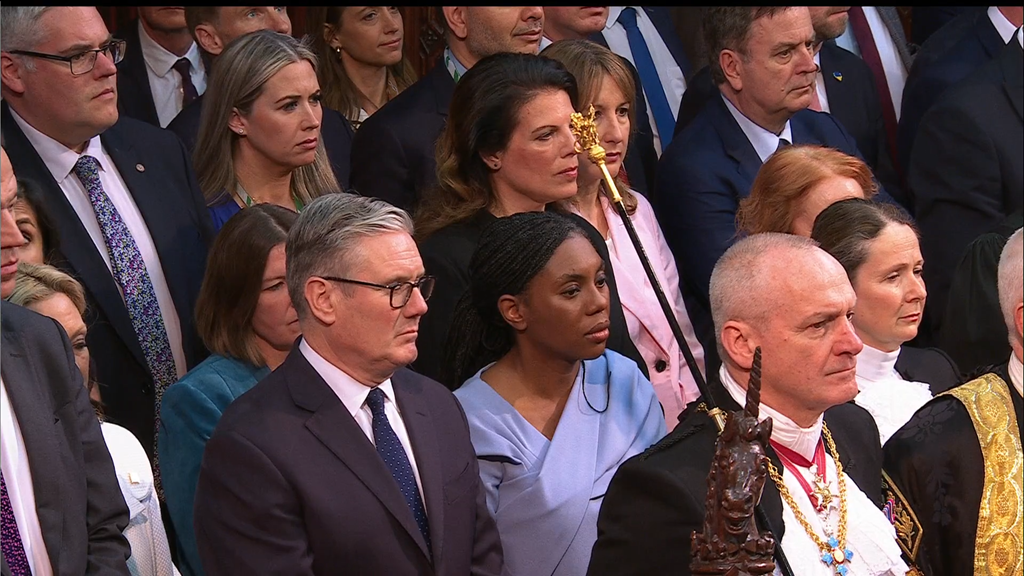
As is tradition, Keir Starmer and Kemi Badenoch entered the House of Lords together ahead of the King’s Speech.
The pair walked through politely, side by side, smiling as pictured below.
The King’s Speech opened with an acknowledgement of the current state of the world.
His majesty said “An increasingly dangerous and volatile world threatens the United Kingdom, with the conflict in the Middle East only the most recent example. Every element of the nation’s energy, defence and economic security will be tested.
“My government will respond to this world with strength and aim to create a country that is fair for all.
“My ministers will take decisions that protect the energy, defence and economic security of the United Kingdom for the long term.
“They will defend the British values of decency, tolerance and respect for difference under our common flag, and they will harness the potential of the pride felt across this country for its communities.”
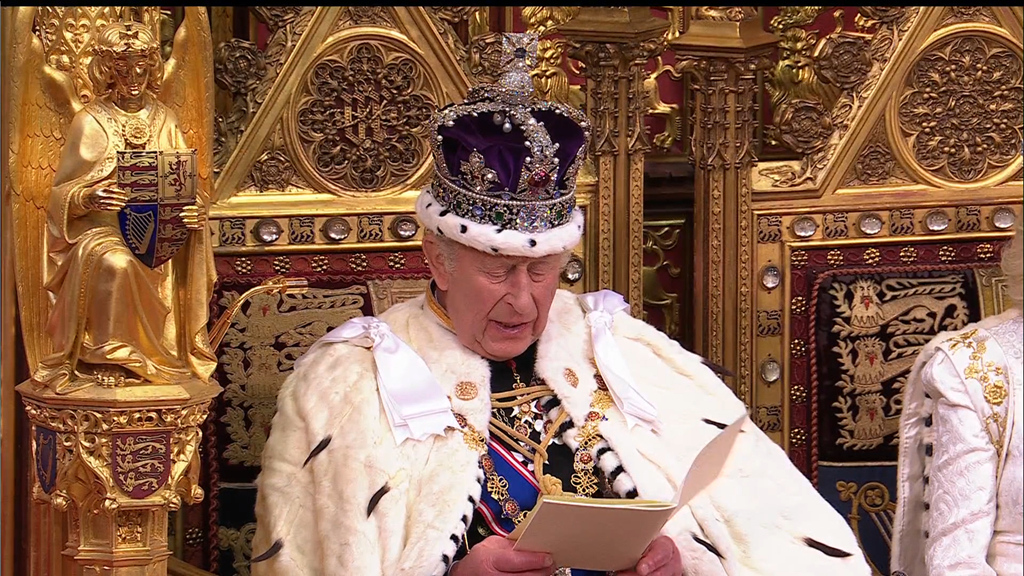
The King then set out the broad elements of the government’s agenda, starting with taking “urgent action to tackle antisemitism and ensure all communities feel safe”.
He then went on to say that the government believes the UK’s economic security “depends on raising living standards” across the country.
“My ministers will support measures that maintain stability and control the cost of living,” the King says.
“They will use public investment to shape markets and attract further private investment.
“They will deploy the power of an active state in partnership with business and enable reforms that support higher growth and a fair deal for working people.”
After setting out the broad themes of the government’s agenda, the King turned to the specific bills ministers intend to introduce.
The first element is improving trade relations, which the government believes are “vital for the United Kingdom’s economic security, for significantly raising economic growth, and for lowering prices for working people”.
There will be bills to “strengthen ties with the European Union”, to “tackle late payments” to small businesses, and to “reduce the burden of unnecessary regulation”.
The King goes on to say that the country’s “economic security depends upon world-class infrastructure”, and so there will be legislation introduced to “unlock the benefits of airport expansion”, to speed up road-building, including the Lower Thames Crossing, and “deliver a fair deal for the North of England through Northern Powerhouse Rail”.
The King confirmed that a bill to nationalise British Steel will also be introduced.
He turned next to the “renewal of public services”, and legislation to reform the police, the NHS, the criminal justice system, and the immigration and asylum system will be introduced.
Bills to “clean up the water industry” and “establish Great British Railways” are also on the government agenda.
The King announced next that legislation will be introduced by the government to introduce Digital ID – a policy that has been controversial since it was announced last year.
He said the long-delayed Hillsborough Law will be introduced that will mandate a “duty of candour” for public servants.
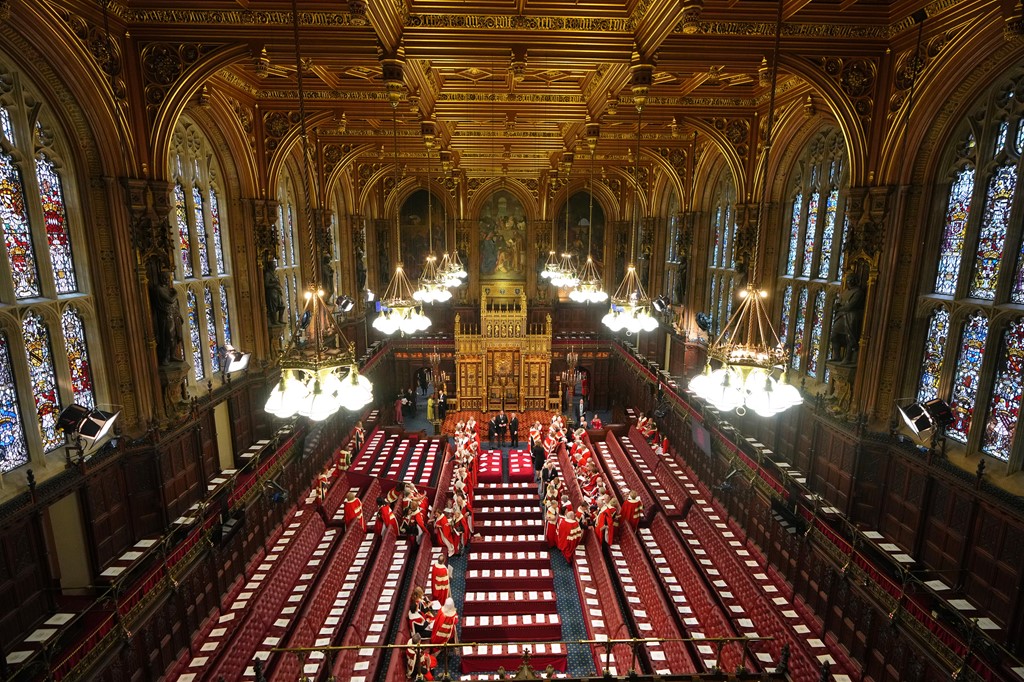
Speaking in the House of Lords, the King announced that the government will introduce a bill to remove peerages under certain circumstances, and there will also be “prosposals” to “strengthen the delivery, accountability, innovation and productivity of the Civil Service”.
Turning next to foreign policy, the King said the government will “continue its unflinching support for the brave people of Ukraine, who fight on the frontline of freedom”.
It will also “seek to improve relations with European partners as a vital step in strengthening European security”, and “continue to promote long-term peace in the Middle East and the two-state solution in Israel and Palestine”.
The monarch reiterated the government’s “unbreakable commitment to NATO and our NATO allies”, and says there will be a “sustained increase in defence spending”.
More broadly, ministers will “seek to reinforce the long-term energy, defence and economic security of the United Kingdom”.
The King announced next that there will be legislation to “increase long-term investment in social housing”, the leasehold system will be reformed, and ground rents will be capped.
He confirmed that a bill will be introduced to be able to “tackle the growing threat from foreign state entities and their proxies” – thought to be a reference primarily to Iran’s Islamic Revolutionary Guard Corps.
A new National Security Bill will be brought forward to “respond to the horrific attack in Southport with measures to protect the British people from extreme violence, and honour the victims, the injured and their families”.
A bill to tackle cyber-security threats is also on the government’s agenda, as is a new Armed Forces Bill to improve the service justice system and codify the Armed Forces covenant.
Continuing the theme of security, the King went on to say ministers will introduce an Energy Independence Bill to scale up homegrown renewable energy and protect living standards for the long term”, as well as introduce new nuclear energy regulation.
The King said the government will “remain a leading advocate for tackling climate change and achieving a world free from poverty”, as well as “take action to reduce humanitarian need and conflict around the world”,
Ministers will also “champion the rights of women and girls to live in a world free from violence”, including by “promoting women’s full economic and political participation within their societies, with agency over the decisions that impact their lives”.
In conclusion, the King said: “My government is committed to the strength and integrity of the Union of the United Kingdom and will continue to work closely with the devolved governments to deliver for citizens across the whole of the nation.”
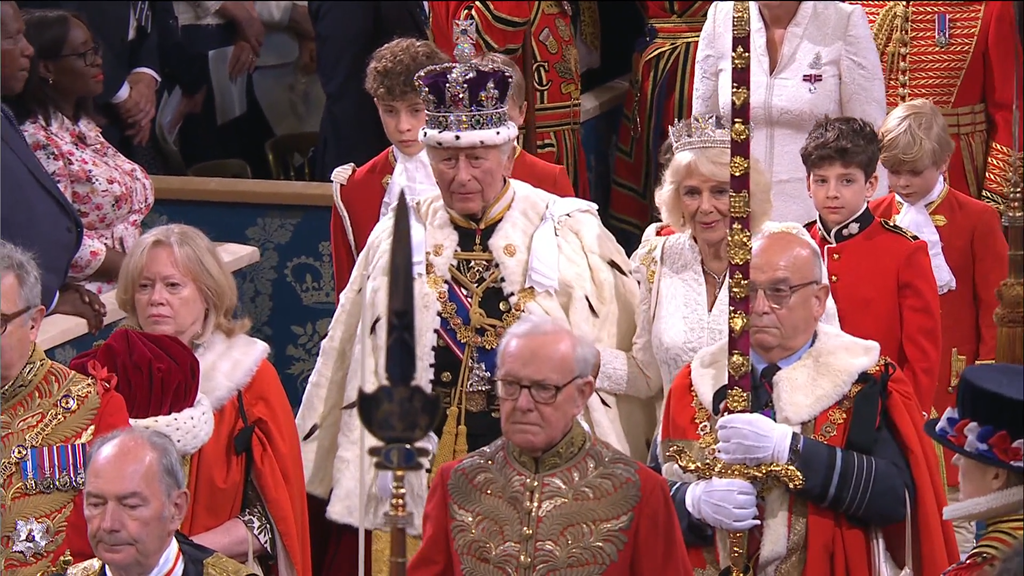
The State Opening of Parliament marks the beginning of the new parliamentary session, and is the only routine occasion where the three parts of parliament – the Commons, the Lords, and the Crown – gather together.
Records suggest that the tradition began during the 15th century, according to the House of Commons library, although many of its key traditions date back to the 17th century.
One of those traditions is that an MP is held hostage in Buckingham Palace – ceremonially these days, of course.
So to ensure the safe return of the monarch to Buckingham Palace at the end of each State Opening of Parliament, a member of the House of Commons is held hostage by the Crown.
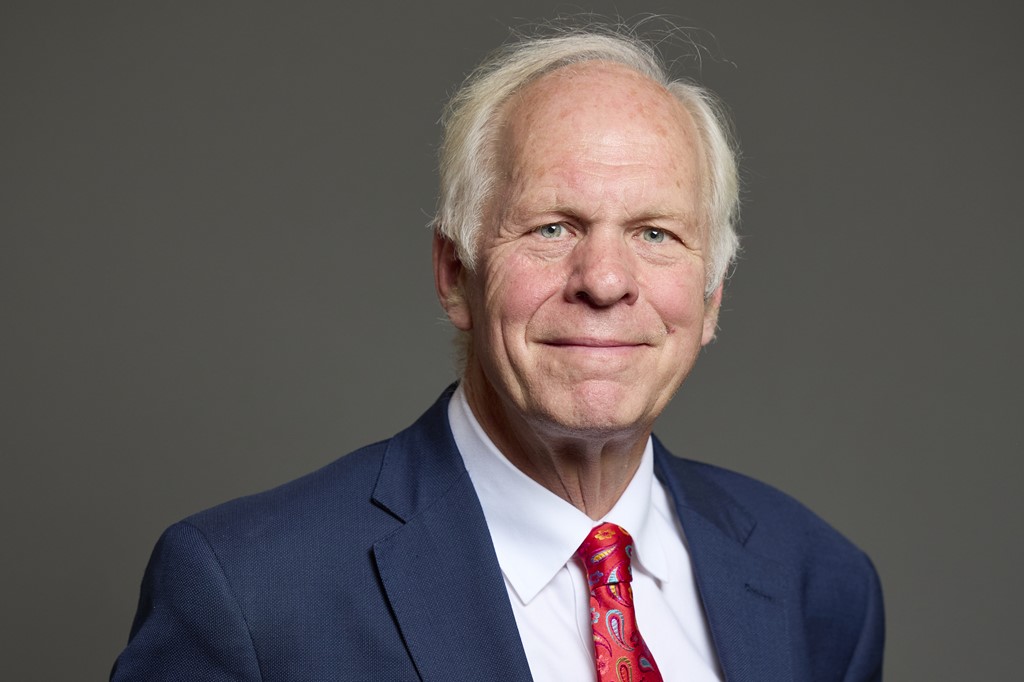
These days, of course, being held hostage tends to involve the typically excellent hospitality of the royal staff, and is a rather comfortable experience. Reports suggest that champagne or sherry is offered to drink, for example.
It is now usually the MP who holds the post of vice-chamberlain of the household, which is a senior government whip.
The person currently holding that post is Nic Dakin MP, who wrote on X: “Not sure I’m looking forward to it, but glad to play my part!”
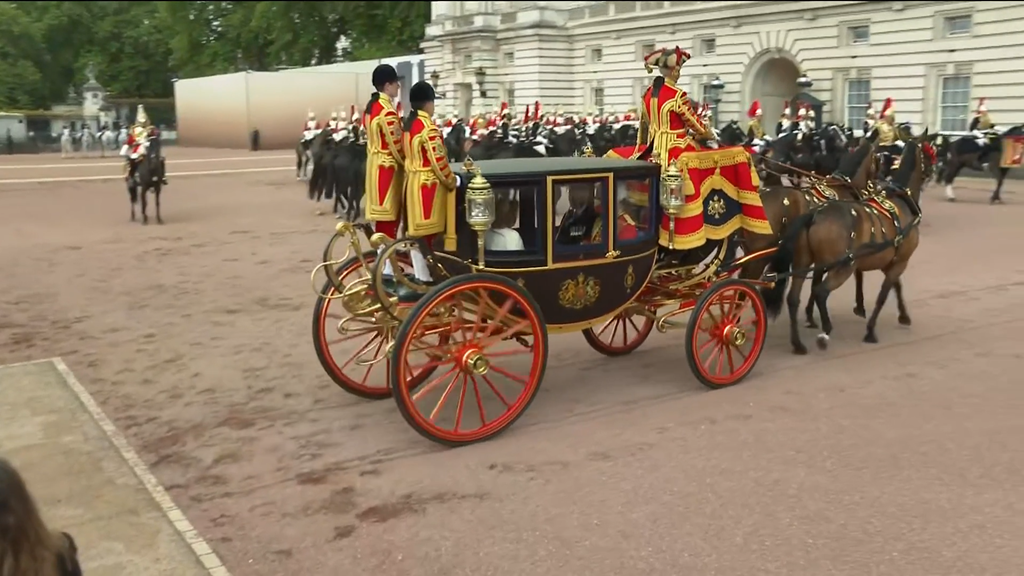
The King and Queen arrived back at Buckingham Palace at approximately 12:17pm following the conclusion of the State Opening of Parliament.
The monarch set out the government’s agenda for the year or so ahead in his speech.
MPs will soon begin the formal debate of the contents.