
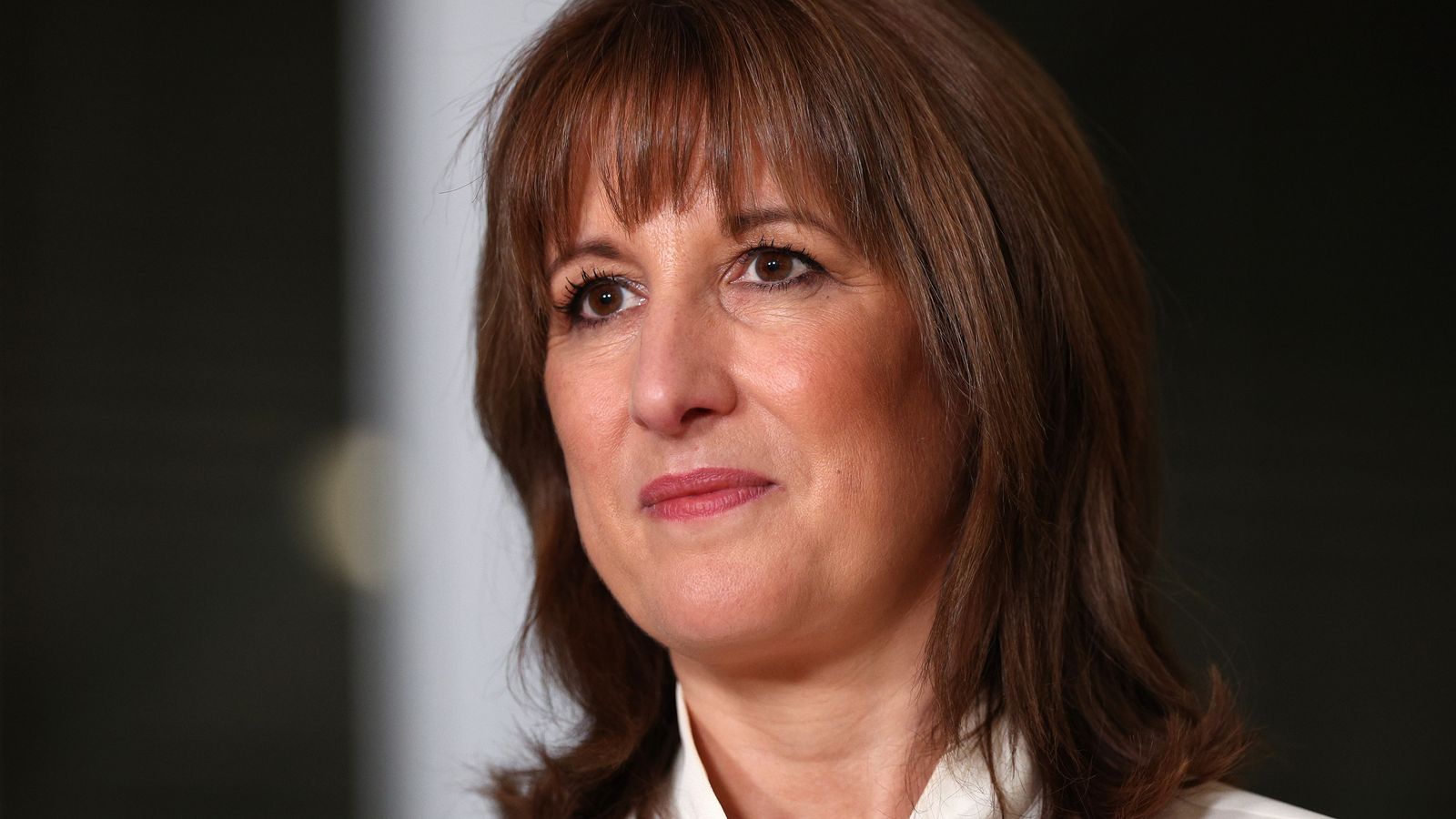
The new stats released today have put the UK top of the G7 for growth and come despite the Iran war. Chancellor, Rachel Reeves, says they show ministers have “the right economic plan”.
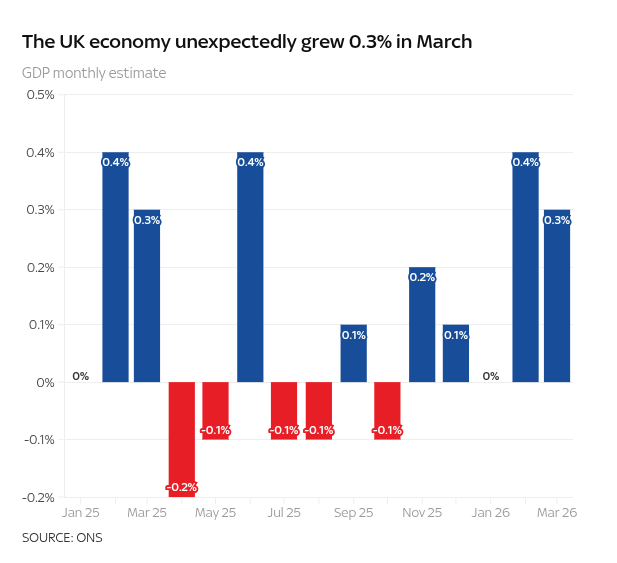
The UK economy recorded growth of 0.3% in March, beating forecasts that had predicted a 0.2% decline, according to newly released figures from the Office for National Statistics (ONS).
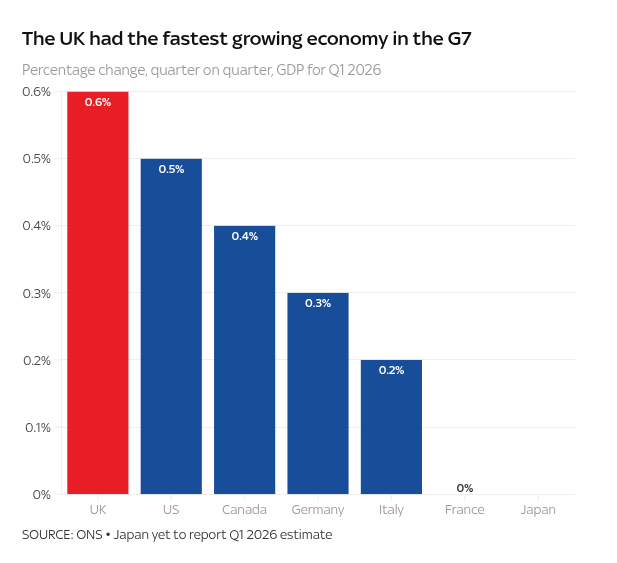
Data published on Thursday also showed the economy expanded by 0.6% across the first quarter of 2026.
The latest figures place the UK at the top of the G7 for economic growth so far this year, although Japan’s first-quarter data has not yet been released.
Rachel Reeves was quick to suggest that they showed that now was not the time for the change and that the government had “the right economic plan”.
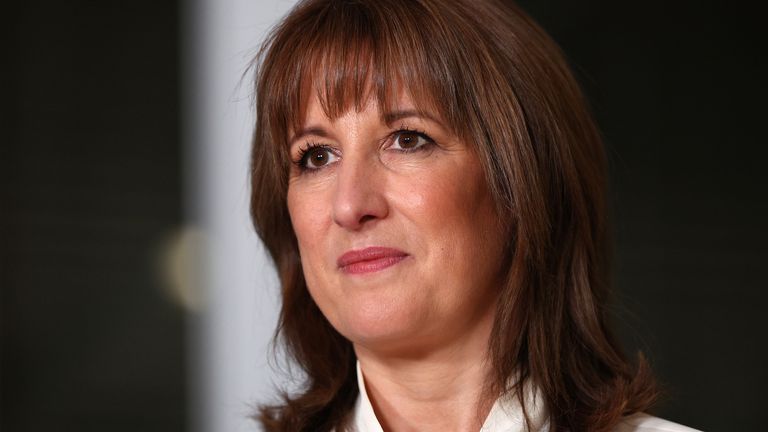
“Now is not the time to put our economic stability at risk,” she said. “To do so would leave families and business worse off.
“Instead, this government is getting on with the job of building an economy that is stronger, more resilient, and prepared for the future.”
Why has the economy grown?
Economic growth for thus quarter was supported by strong performances in the production and construction sectors, despite rising energy costs linked to disruption in global oil and gas supplies caused by the conflict involving Iran.
There had been concerns that higher fuel and heating costs would reduce consumer spending and slow economic activity.
The latest figures follow growth recorded in February, when the UK economy expanded by 0.4%.
The government and Treasury will be celebrating this as a win, after a long week for the Prime Minister, this unexpected growth will be reassuring for the Chancellor and government.
On a note of caution, The strength of the figures, however, could have been impacted by companies’ reaction to the Iran war-related supply disruption.
“GDP strength is exaggerated by front-running of potential supply disruptions and noise in some sectors,” said economic research firm Pantheon Macroeconomics’s chief UK economist, Rob Wood.