

US Interest Rates Stay High as UK Businesses Warn of Mounting Pressure from Global Borrowing Costs
29 June 2026
US interest rates are continuing to ripple through the UK economy, with businesses facing higher import costs, tighter borrowing conditions and growing uncertainty over investment plans as the Federal Reserve signals that financial conditions in the United States will remain restrictive for longer than expected.
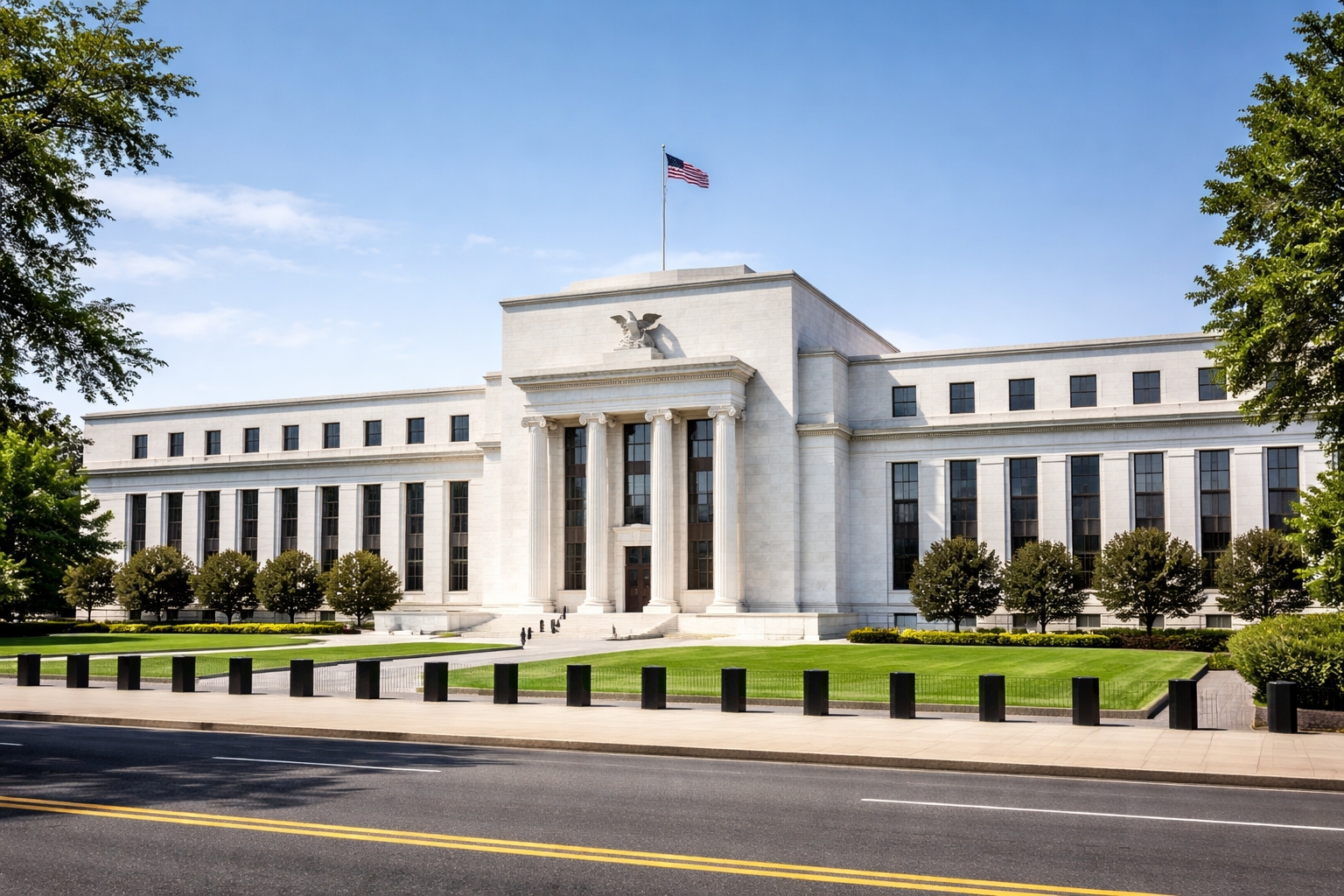
The Federal Reserve has held its key interest rate in the 3.50%–3.75% range, with policymakers in recent meetings stressing that inflation pressures have not yet eased enough to justify cuts. Officials have pointed to persistent price growth in parts of the US economy and ongoing geopolitical risks as reasons to maintain a cautious stance.
While markets had earlier expected a gradual reduction in US rates during 2026, sentiment has shifted sharply. Investors are now pricing in the possibility that borrowing costs in the world’s largest economy could remain elevated well into next year.
Although the decision is made in Washington, the effects are being felt far beyond the United States — including across UK boardrooms.
The most immediate impact has been in currency markets. A relatively high US interest rate environment has strengthened the dollar, as global investors continue to seek higher returns in dollar-denominated assets. That shift has put sustained pressure on the pound, which has weakened at points against the US currency over recent months.
For UK businesses, that movement has had a direct and often immediate effect on costs. Firms that rely on imported goods — particularly in manufacturing, retail and energy-intensive sectors — are paying more for materials priced in dollars, including oil, gas, metals and electronic components.
Several businesses have reported that even small currency fluctuations are quickly feeding through into higher input costs, forcing difficult decisions on pricing, margins and supply chains. Retailers in particular have warned that they are operating in an environment where costs remain volatile and consumer demand is still subdued.
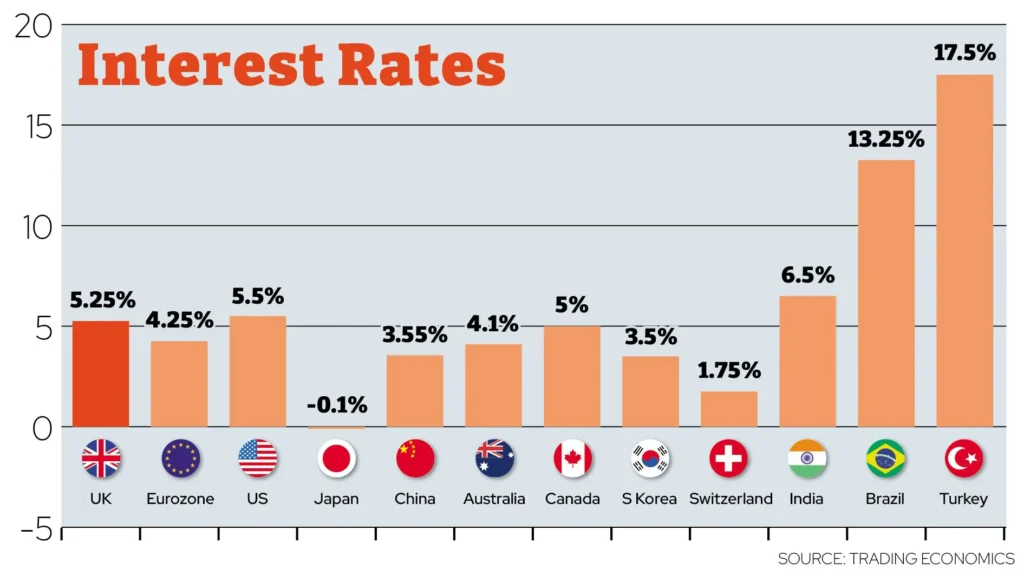
The impact is also being felt in corporate borrowing.
When US interest rates remain high, global credit conditions tend to tighten. Investors demand higher returns, and banks typically adjust lending conditions to reflect the higher cost of capital. For UK companies, that can translate into more expensive loans, higher refinancing costs and stricter lending criteria.
Businesses looking to expand or invest in new projects are increasingly cautious. Some firms have delayed capital spending decisions, while others are prioritising debt reduction over expansion as they adapt to a prolonged period of higher borrowing costs.
Economists say the effect is particularly pronounced among small and medium-sized enterprises, which are more reliant on traditional bank lending and less able to access alternative sources of finance such as bond markets.
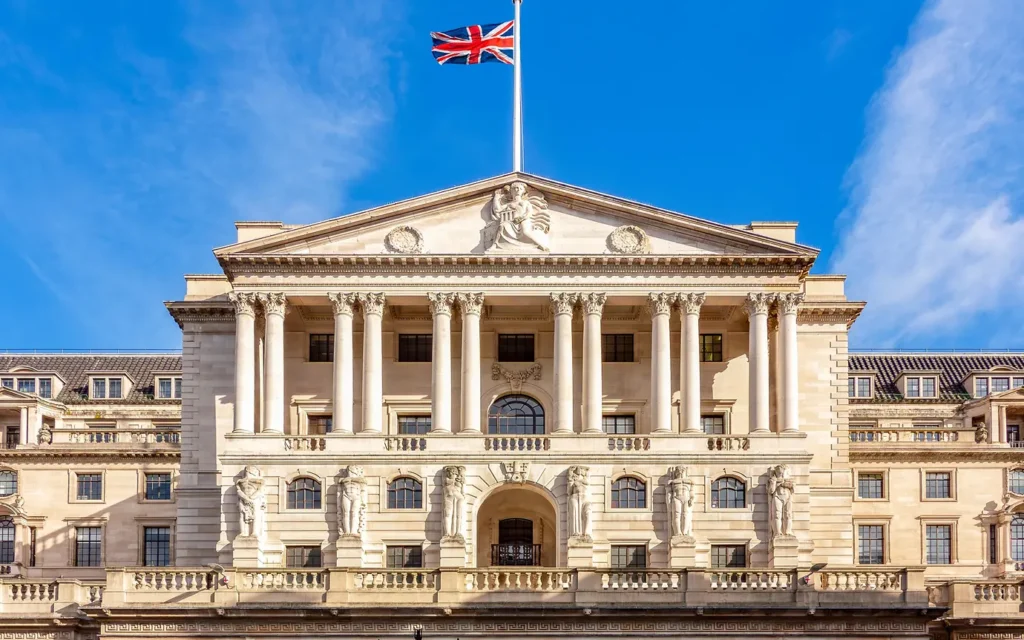
The Bank of England does not set interest rates in response to the Federal Reserve, but policymakers in London cannot ignore developments in the US.
If American rates remain elevated, UK interest rates may also need to stay higher for longer to avoid large capital flows out of sterling assets. That would risk keeping domestic borrowing costs elevated, particularly for mortgages, commercial loans and business credit.
Financial markets are already reflecting that expectation, with traders pushing back forecasts for significant UK rate cuts and instead anticipating a more gradual easing cycle.
For exporters, the picture is more mixed.
A weaker pound can make UK goods and services more competitive in overseas markets, potentially supporting demand in sectors such as advanced manufacturing, pharmaceuticals and professional services. However, those gains are often offset by higher import costs, particularly for firms that rely on global supply chains.
Many manufacturers describe the current environment as a “margin squeeze”, where neither side of the equation — export revenues or input costs — offers clear relief.
Business confidence surveys suggest firms are increasingly hesitant to commit to long-term investment. Across manufacturing, construction and services, companies have reported weaker expectations for output growth and greater caution over hiring decisions.
Some executives say the main challenge is not just the level of interest rates, but the uncertainty around how long they will remain elevated. That uncertainty is making it harder for firms to plan beyond the short term.
The broader concern for economists is that prolonged tight monetary conditions in the US could slow global growth, with knock-on effects for trade, investment and employment in open economies such as the UK.
For now, attention remains focused on the Federal Reserve’s next policy signals. Any shift in tone — whether towards cuts or continued restraint — is likely to be closely watched not only by financial markets, but also by UK businesses already navigating a challenging economic environment.
Until then, the message from both sides of the Atlantic appears consistent: borrowing costs are likely to remain higher for longer, and businesses will need to adjust accordingly.