


By Archie Weeks – Founder & Editor
As Americans mark the 250th anniversary of the Declaration of Independence, the celebrations are about far more than fireworks, parades and patriotism. For Britain, the milestone is an opportunity to reflect on one of history’s greatest geopolitical reversals: the loss of 13 colonies that would evolve into the world’s largest economy, most powerful military and the United Kingdom’s closest strategic ally.
Two and a half centuries after the American colonies declared independence from the British Crown, the relationship between London and Washington has transformed from conflict to cooperation.
On 4 July 1776, delegates gathered in Philadelphia adopted the Declaration of Independence, asserting that Britain’s rule over its American colonies had become intolerable. The Revolutionary War that followed ended with Britain recognising the independence of the United States in 1783.

The rise of the United States reshaped the global economy. Britain remained the dominant industrial and imperial power throughout much of the 19th century, but by the early 20th century America’s manufacturing strength, financial markets and expanding population had shifted the balance of power across the Atlantic.
Today, the two nations are no longer rivals. They are partners whose economies, security interests and diplomatic priorities are deeply intertwined.
A Partnership Worth Hundreds of Billions
The United States is Britain’s largest single-country trading partner and one of its most important sources of foreign investment. British companies employ hundreds of thousands of workers across America, while US firms have become major employers and investors throughout the United Kingdom.
From advanced manufacturing and pharmaceuticals to financial services, defence and technology, investment flows in both directions underpin millions of jobs and billions of pounds in economic activity.

The City of London and Wall Street remain two of the world’s most influential financial centres, connected by capital markets that operate around the clock. Decisions made in Washington on interest rates, tariffs, taxation or regulation are often felt almost immediately in boardrooms across Britain.
The economic relationship extends well beyond trade. British pension funds invest heavily in American markets, while US investors continue to view the UK as a gateway for international business, despite the political and economic upheavals of recent years.
More Than a Trade Relationship
Economics tells only part of the story.
The so-called “Special Relationship” has become one of the defining features of Western diplomacy. British and American forces have fought alongside one another in every major conflict of the modern era, from the beaches of Normandy to operations in Afghanistan.
Intelligence cooperation through the Five Eyes alliance remains among the closest in the world, while both nations continue to play leading roles within NATO.

That relationship has taken on renewed importance amid Russia’s war in Ukraine, growing tensions with China and increasing instability across the Middle East.
While governments change on both sides of the Atlantic, strategic cooperation has remained remarkably resilient.
America Faces New Challenges at 250
Yet America’s 250th anniversary comes at a moment of profound uncertainty.
Political polarisation has reached levels unseen in decades. Questions surrounding immigration, public finances, industrial policy and America’s role on the global stage continue to dominate domestic debate.
The country is also confronting enormous economic challenges.
Federal debt has reached historic levels. Competition with China has intensified. Artificial intelligence is reshaping industries at unprecedented speed, while governments around the world compete to attract investment in advanced manufacturing, semiconductors and clean energy.

For Britain, these developments are far from distant concerns.
Changes in US trade policy can alter global supply chains overnight. Decisions made by the Federal Reserve influence borrowing costs worldwide. American regulation of artificial intelligence, financial markets and technology companies increasingly shapes international standards that British businesses must navigate.
The Next Chapter
The next quarter century may prove as transformative as the last.
Artificial intelligence, quantum computing, biotechnology and space industries are expected to redefine economic leadership. Both Britain and America are investing heavily in these sectors, recognising that future prosperity will depend on innovation as much as manufacturing once did.
At the same time, both countries face common pressures: ageing populations, rising healthcare costs, energy security, climate resilience and intensifying geopolitical competition.
Whether the coming decades are defined by deeper cooperation or growing divergence will shape not only the future of the transatlantic alliance but also the wider global economy.
A Shared Future
History often remembers 4 July as the day Britain lost America.
In reality, it marked the beginning of a relationship that has evolved far beyond empire.
The former colony became a superpower. The former imperial power became one of its closest allies.
Today, the United Kingdom and the United States remain bound by shared democratic institutions, extensive trade, scientific collaboration, defence cooperation and deep cultural ties.
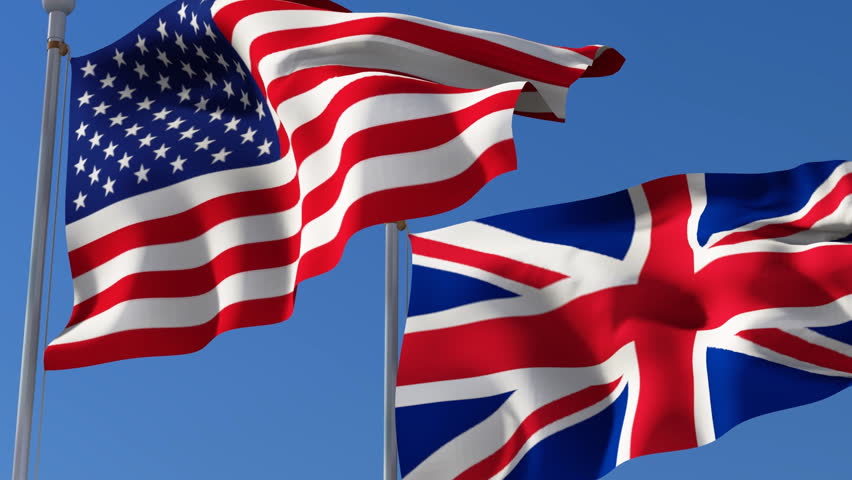
As America celebrates 250 years of independence, Britain has good reason to celebrate the remarkable transformation of a relationship once defined by war into one characterised by partnership.
The challenges ahead—from artificial intelligence and global trade to security and economic growth—will test both nations. But if the past 250 years demonstrate anything, it is that the future of Britain and America is likely to remain closely connected.
For British businesses, policymakers and investors alike, America’s 250th birthday is not merely a historical anniversary. It is a reminder that what happens across the Atlantic continues to matter profoundly on this side of it.