


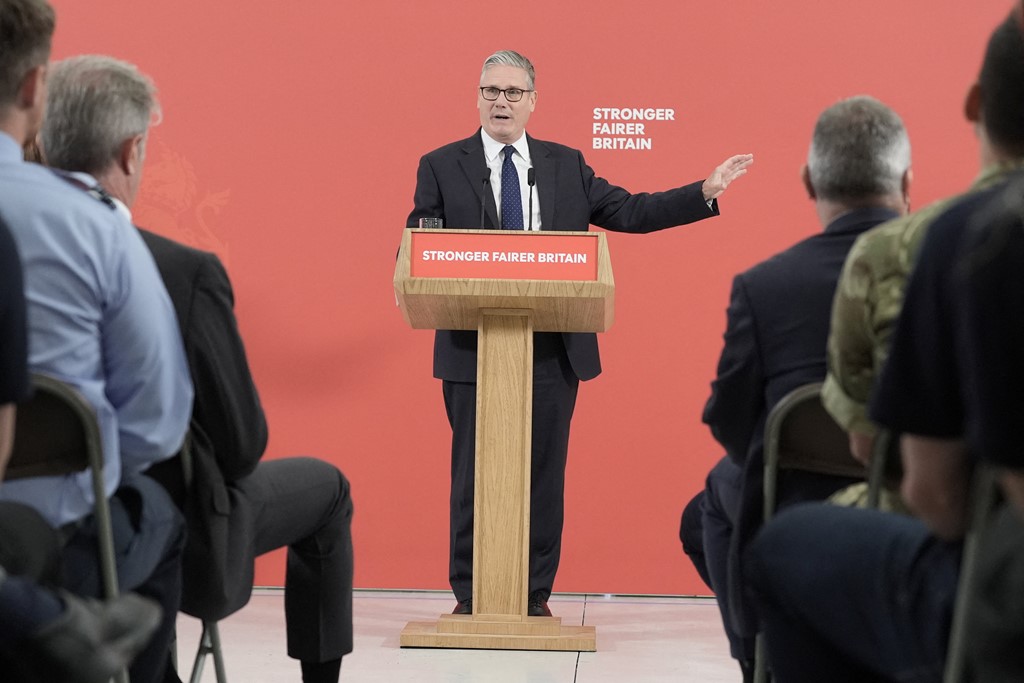
Sir Keir Starmer has unveiled the long-delayed defence investment plan (DIP) today, with a £15bn uplift in spending which he says will help protect Britain from threats in an increasingly “volatile” world. But the plans have been criticised by opposition parties.
The government has unveiled its long-awaited Defence Investment Plan (DIP), committing £298 billion to Britain’s armed forces over the next four years as ministers seek to modernise the military in response to growing global threats. However, questions remain over whether the funding will be sufficient to deliver the ambitions set out in the Strategic Defence Review (SDR).
Defence Secretary Dan Jarvis told MPs that the package represents the largest increase in defence spending over a single parliament in real terms that any current member of the House has seen. The government says defence spending will rise by 27% in real terms between 2023-24 and 2029-30, taking spending to around 2.7% of GDP by the end of the decade.
Jarvis confirmed that the plan includes an additional £15 billion on top of last year’s spending review settlement, including £1.5 billion secured from the Treasury following his appointment just weeks ago after the resignation of former defence secretary John Healey.
“Our commitment to NATO is absolute,” Jarvis told the House of Commons. “Britain has always met its NATO spending commitments, and under this government we always will.”
Major Investment in Technology and Nuclear Deterrence
The Defence Investment Plan places significant emphasis on modern warfare and emerging technologies.
Among the headline commitments are:
- £5 billion for surveillance and strike drones across the Royal Navy, British Army and Royal Air Force.
- Nearly £2 billion to integrate artificial intelligence and advanced software across the armed forces.
- £100 million for a Defence AI Task Force.
- £115 million to defend against AI-enabled threats.
- £8.6 billion for the Global Combat Air Programme (GCAP), the sixth-generation stealth fighter being developed with Japan and Italy.
- £64 billion for the UK’s nuclear deterrent, including the Dreadnought submarine programme, AUKUS submarines and nuclear warhead development.
- £26 billion to modernise Britain’s naval bases.
- £11 billion to expand missile and munitions stockpiles.
- £790 million for air, drone and missile defence systems.
- More than £3 billion for military space capabilities.
- £2.5 billion for cyber defence.
- £400 million to protect undersea cables and critical infrastructure.
The government also announced the creation of a new uncrewed systems task force designed to rapidly develop autonomous military technologies, alongside funding for Europe’s largest drone testing facility in Swindon.
Funding Still Falls Short, Critics Warn
Despite the scale of the package, defence analysts and politicians from across Parliament questioned whether the investment goes far enough.
Security and defence editor Deborah Haynes noted that although ministers are presenting the package as £298 billion of defence spending, only a small proportion represents genuinely new funding, with much of the total being reallocated from existing budgets.
She said there would be concerns that the money “doesn’t go far enough” to deliver everything the military requires.
Haynes added that Britain’s armed forces have historically managed with fewer resources than requested but warned that relying on technological advances to compensate represents “a big gamble”. If that gamble fails, she argued, the military could remain “very hollow.”
Military analyst Michael Clarke echoed those concerns, arguing that the Ministry of Defence had previously estimated it required around £28 billion in additional funding over four years to fully implement last year’s Strategic Defence Review.
“This looks like an interim plan,” Clarke said. “If this is as far as it goes, then it would be inadequate.”
He warned that Britain is attempting to transform its military for potential high-intensity warfare after decades focused primarily on expeditionary operations, while rebuilding armed forces that have been “hollowed out” over many years.
Healey Calls for Faster Spending Increase
Former defence secretary John Healey, whose resignation earlier this month highlighted disagreements with the Treasury over defence funding, welcomed the additional £1.5 billion but maintained that significantly more investment would be needed.
Healey argued that Britain would still be spending only around 2.7% of GDP on defence in 2030 despite NATO’s warning that Russia could pose a major threat by then.
He urged ministers to establish a firm timetable for reaching 3% of GDP on defence spending and to produce a credible funding plan capable of meeting NATO’s longer-term target of 3.5% by 2035.
During Commons exchanges, Healey asked Jarvis whether he agreed that “more needs to be done” beyond the current plan.
Jarvis acknowledged that Britain “will need to spend more on defence” and said it would remain the government’s number one priority during the next spending review.
Opposition Attacks “Too Little, Too Late”
The Conservatives dismissed the plan as underfunded and overdue.
Shadow Defence Secretary James Cartlidge described the announcement as “too little, too late”, arguing that the additional funding remained insufficient and that many of the capabilities outlined would not enter service until the 2030s despite immediate security threats.
Cartlidge questioned why projected defence spending of roughly 2.68% of GDP by 2030 had been unacceptable to Healey before his resignation but was now considered sufficient by Jarvis.
He also accused Prime Minister Sir Keir Starmer of rushing publication of the Defence Investment Plan in a “desperate search for a legacy” before leaving office.
Parliamentary Scrutiny Continues
Defence Select Committee chairman Tan Dhesi welcomed the fact that the plan is now fully funded by the Treasury but criticised ministers for failing to provide a clear roadmap towards spending 3% of GDP on defence by 2030.
He also argued that, despite previous promises, the document contains less operational detail than earlier defence equipment plans.
Jarvis responded that the government remained committed to meeting NATO obligations and would produce a credible trajectory towards the alliance’s 3.5% target by 2035.
Wider Political Debate
Elsewhere, Labour MP Matt Western welcomed the emphasis on strengthening the Royal Navy’s hybrid capabilities, saying it demonstrated the government’s awareness of evolving maritime security threats posed by Russia.
The Liberal Democrats criticised the government for redirecting funding previously intended to improve military accommodation, arguing that service personnel living in poor housing were paying the price for higher defence spending.
Meanwhile, the Green Party argued that national security investment should also address cyber attacks, climate change, food and water insecurity and future pandemics rather than focusing primarily on conventional military capabilities.
Former Labour leadership contender Wes Streeting defended the government’s approach, arguing Labour had inherited significant defence funding challenges from the previous Conservative administration, leaving ministers with “an uphill mountain to climb.”
Looking Ahead
The Defence Investment Plan comes just weeks before Sir Keir Starmer is expected to leave office, with political observers viewing the package as one of the defining policies of his premiership.
While the government insists the plan places Britain on course to meet future NATO commitments, analysts broadly agree that additional funding will be required if the UK is to fully deliver the ambitions of the Strategic Defence Review and rebuild military capability in an increasingly volatile international security environment.