

When Could Andy Burnham Become Prime Minister?
Analysis | 29 June 2026
Britain could be on course for another change at the top of government following Sir Keir Starmer’s resignation announcement, with Andy Burnham now widely regarded as the overwhelming favourite to become the next Labour leader and, by extension, the next Prime Minister.
Starmer confirmed last week that he would step down after mounting pressure from Labour MPs following months of poor polling, internal divisions and disappointing election results. His resignation has triggered a rapid leadership transition, with Burnham emerging as the only declared candidate and no significant challenger having entered the race. (The Guardian)
The Timeline
22 June
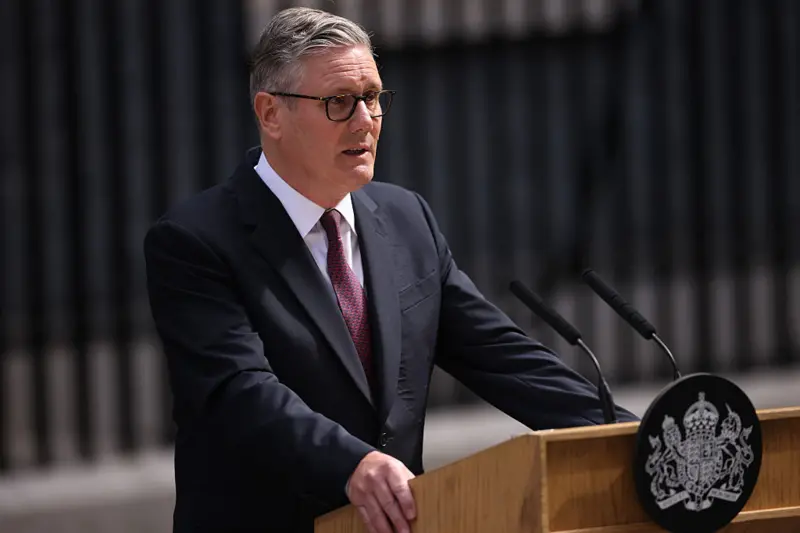
Sir Keir Starmer announced he would resign as Labour leader and Prime Minister, acknowledging that he no longer believed he was the right person to lead the country through the next stage of government. The announcement came after days of intense discussions with Cabinet colleagues and Labour MPs. (The Guardian)
Late June
Andy Burnham secured his return to Westminster by winning the Makerfield by-election before immediately confirming his intention to seek the Labour leadership. With no major rival entering the contest, party insiders have increasingly viewed him as the clear favourite to succeed Starmer. (The Guardian)
29 June
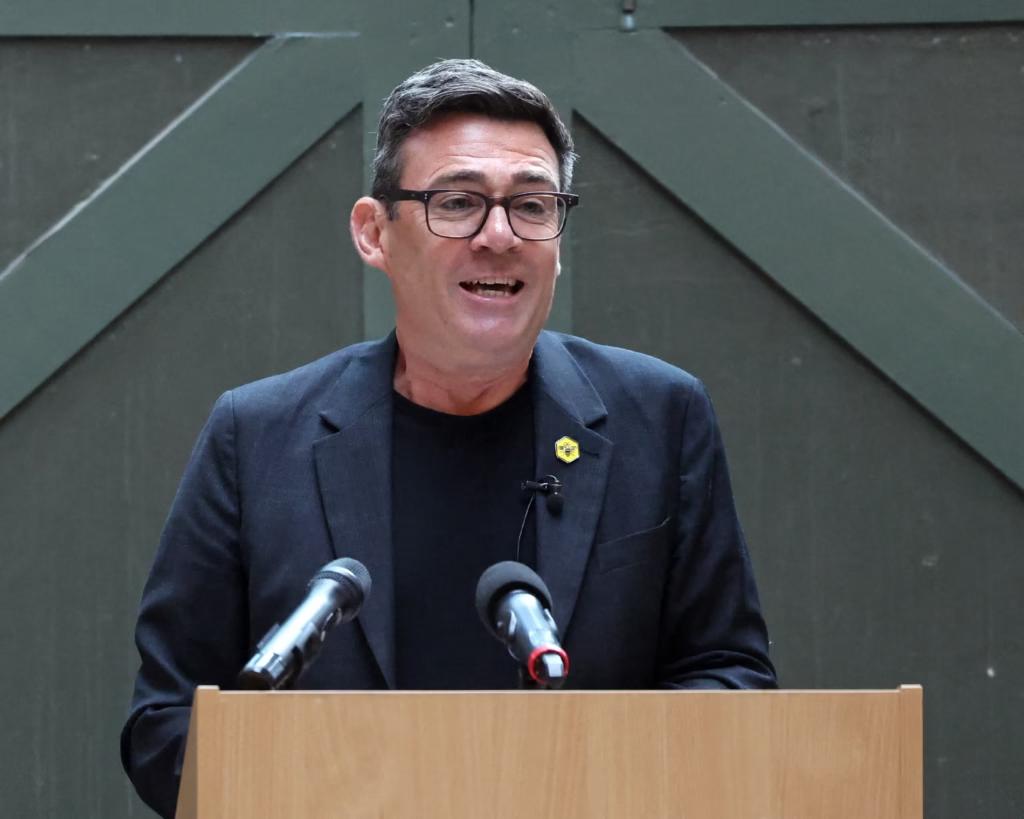
Burnham delivered his first major policy speech as leadership frontrunner, outlining an ambitious programme centred on devolving power away from Westminster. His proposals included creating a “No.10 North” in Manchester and transferring greater powers over housing, education and economic development to regional authorities. The speech was widely seen as setting out the agenda of a potential Burnham premiership. (The Guardian)
When could Burnham become Prime Minister?
The exact date has not been officially confirmed.
However, the current Labour leadership timetable means that if Burnham remains the sole candidate—or wins the contest—he is expected to become Labour leader in mid-July. Because Labour commands a majority in the House of Commons, the new Labour leader would then be invited by the King to form a government and become Prime Minister without the need for a general election. Reports suggest this transition could take place around 17–20 July, although the precise timing depends on the completion of the party’s leadership process. (AP News)
What happens next?
Should Burnham become Prime Minister, he is expected to begin appointing a new Cabinet almost immediately before setting out his legislative programme for Parliament. His early priorities are expected to include constitutional reform, further devolution to England’s regions, housing, infrastructure investment, industrial policy and public service reform.
Burnham has also indicated that he wants to govern differently from recent administrations, arguing that power should be shared with local communities rather than concentrated in Whitehall. His Manchester speech was widely interpreted as the clearest indication yet of the direction a Burnham government would take. (The Guardian)
While Burnham is widely expected to become Britain’s next Prime Minister, the leadership process is still underway and the timetable could change if another candidate enters the race or if Labour’s National Executive Committee alters the schedule. As things stand, however, the transition appears likely to be completed during the second half of July. (AP News)