


Andy Burnham Pledges ‘Biggest Rebalancing of Power’ in Major Speech Setting Out Vision for Britain
Manchester | 29 June 2026
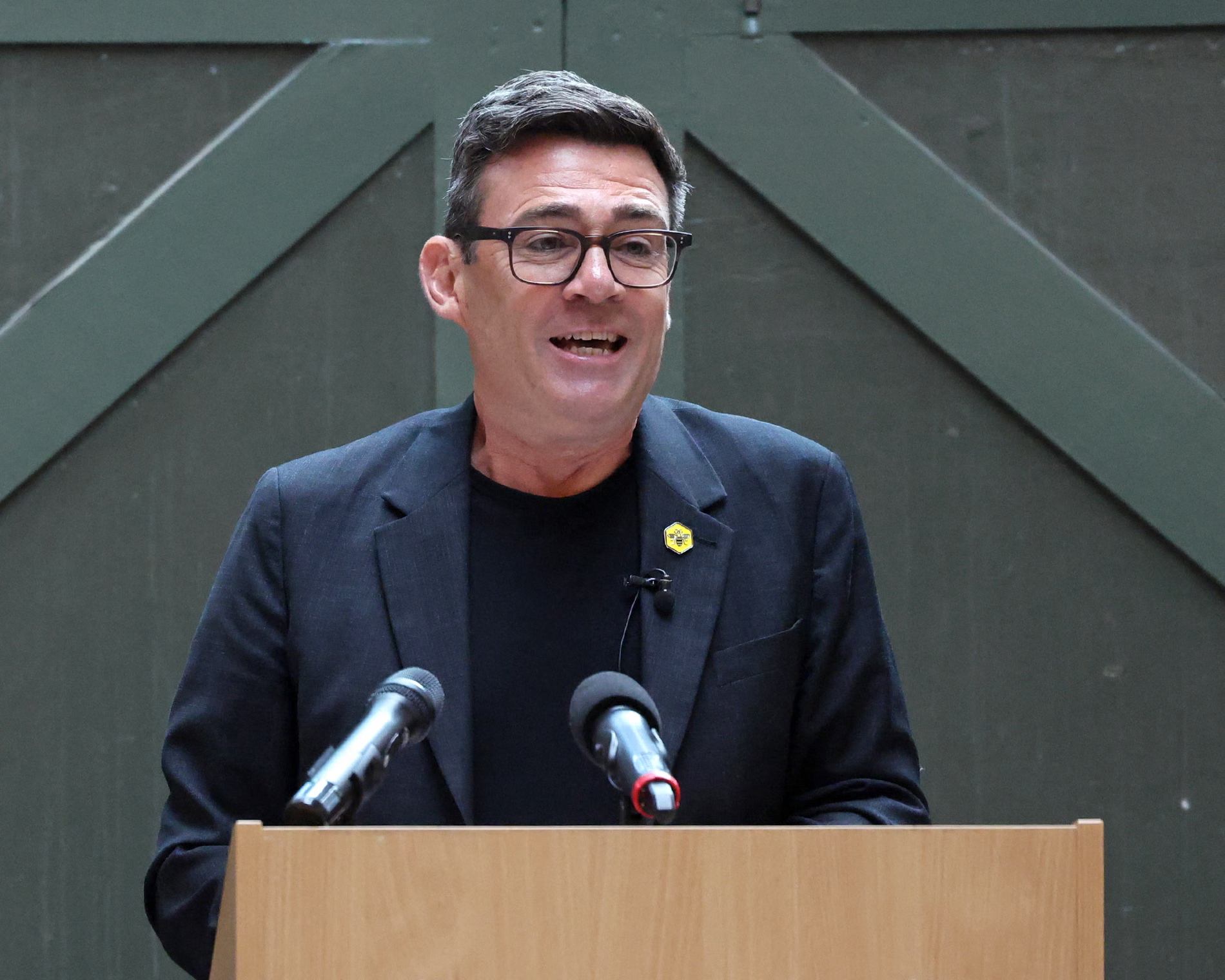
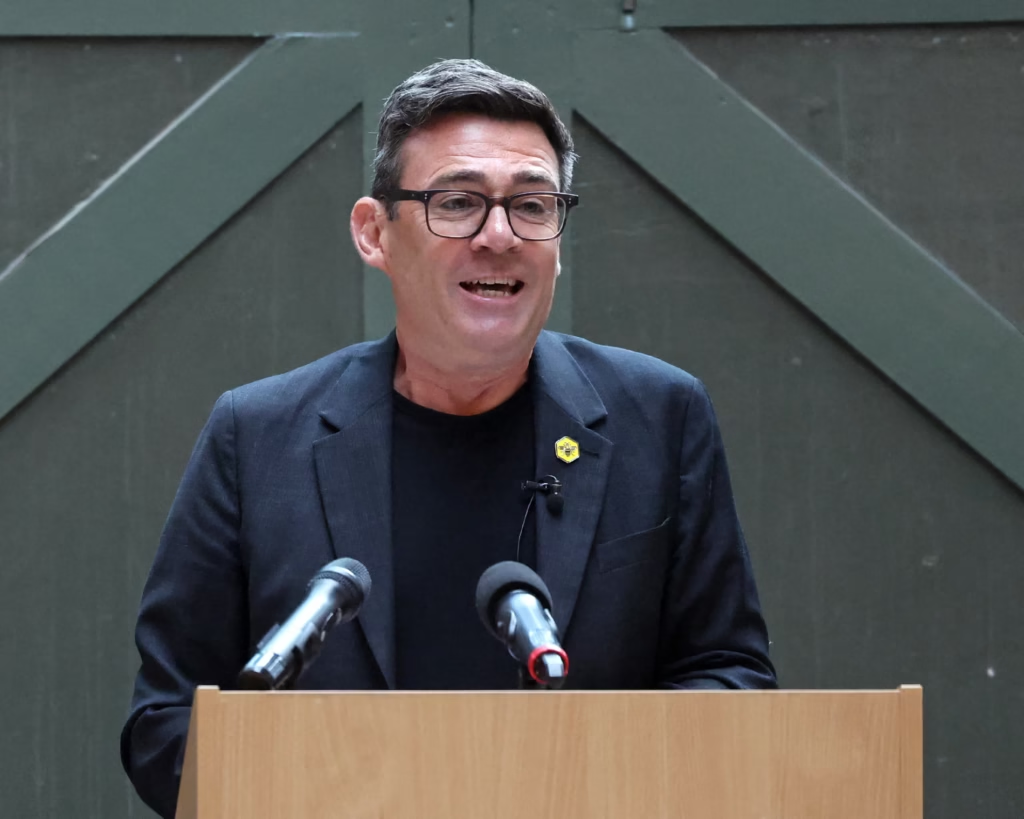
Andy Burnham has unveiled an ambitious blueprint for reshaping Britain, promising what he described as “the biggest rebalancing of power the country has ever seen” during a major speech in Manchester that outlined his vision for the country’s future.
Speaking at the People’s History Museum, the former Greater Manchester Mayor and MP for Makerfield said Britain had become too centralised, arguing that decades of decision-making from Westminster had left many towns and cities struggling with slower economic growth, underinvestment and declining public confidence in politics.
Burnham’s speech centred on a plan to transfer significant powers away from Whitehall and into the hands of regional mayors, local authorities and communities. He argued that local leaders are better placed to understand the needs of their areas and should therefore have greater control over housing, transport, education, employment support and economic development.
One of the headline announcements was a proposal to establish a “No 10 North” in Manchester. Under the plan, parts of the Prime Minister’s operation would be permanently based outside London, with Burnham saying the move would ensure government was more closely connected to communities across the UK rather than remaining concentrated in Westminster. He described the proposal as both a practical reform and a symbolic demonstration that power should be shared more evenly throughout the country.
During the address, Burnham repeatedly argued that Britain requires what he called a “circuit-breaker” after years of economic uncertainty and political instability. He said successive governments had failed to address deep regional inequalities and insisted that long-term investment, rather than short-term political decisions, would be needed to improve living standards.
The speech outlined a ten-year economic programme built around what Burnham called “good growth in every postcode”. His proposals include increased investment in transport infrastructure, affordable housing, skills training, advanced manufacturing, scientific research and innovation. He also highlighted the role universities could play in driving regional economic growth by working more closely with businesses and local government.
Another major element of the proposals focuses on tackling youth unemployment. Burnham said regional leaders should receive greater responsibility for helping young people who are not in education, employment or training. He argued that local authorities could coordinate employment support, training opportunities and education more effectively than a system managed centrally from Whitehall. Supporters believe this could help reduce long-term welfare costs while improving opportunities for younger people.
Burnham also pledged to strengthen British industry by using government procurement to support domestic businesses wherever possible. He said investment in defence, infrastructure and public services should create jobs across the UK while encouraging apprenticeships and skills development.
Throughout the speech, Burnham drew heavily on his experience leading Greater Manchester since 2017. He argued that the region’s investment in transport, housing, policing and public services demonstrated how devolved powers can produce better outcomes when local leaders are given the authority to make decisions. He suggested that similar approaches could be replicated across England and the wider United Kingdom.
Political reaction to the speech was swift. Conservative leader Kemi Badenoch criticised Burnham’s proposals, arguing they relied too heavily on increased government intervention and failed to answer wider questions about public spending and economic growth. Conservative figures also questioned whether the reforms represented genuine change or simply another expansion of the state.
Supporters, however, described the speech as one of the clearest statements yet of Burnham’s political philosophy. They argue that devolving power away from Westminster could help reduce regional inequality, improve accountability and encourage long-term economic growth beyond London and the South East.
The speech comes at a significant moment in British politics as Burnham seeks to establish himself as the country’s next national leader. His address was designed to set out not only his economic priorities but also a broader vision for constitutional reform, with devolution placed at the centre of his programme.
Further policy announcements are expected in the coming weeks as Burnham develops the proposals outlined in Manchester. Whether the plans ultimately become government policy will depend on political support in Parliament, but today’s speech marks one of the most significant interventions yet in the debate over how Britain should be governed in the years ahead.